
Highpoint Chimney Services: Chimney Repair in Bedminster NJ
At Highpoint Chimney Services, we’re proud to bring Bedminster, NJ homeowners high-quality chimney repair work that keeps their fireplaces performing as safely and as efficiently as possible. Whether your chimney is showing early signs of masonry wear or you’re dealing with active leaks, leaning structures, deteriorating liners, or damaged flashing, our team has the training, tools, and experience to restore your system to a stronger condition. We work on historic homes, newer builds, and everything in between, and we always aim to provide long-lasting results that help protect your home and family season after season.
What Types of Chimney Repairs Do We Handle?
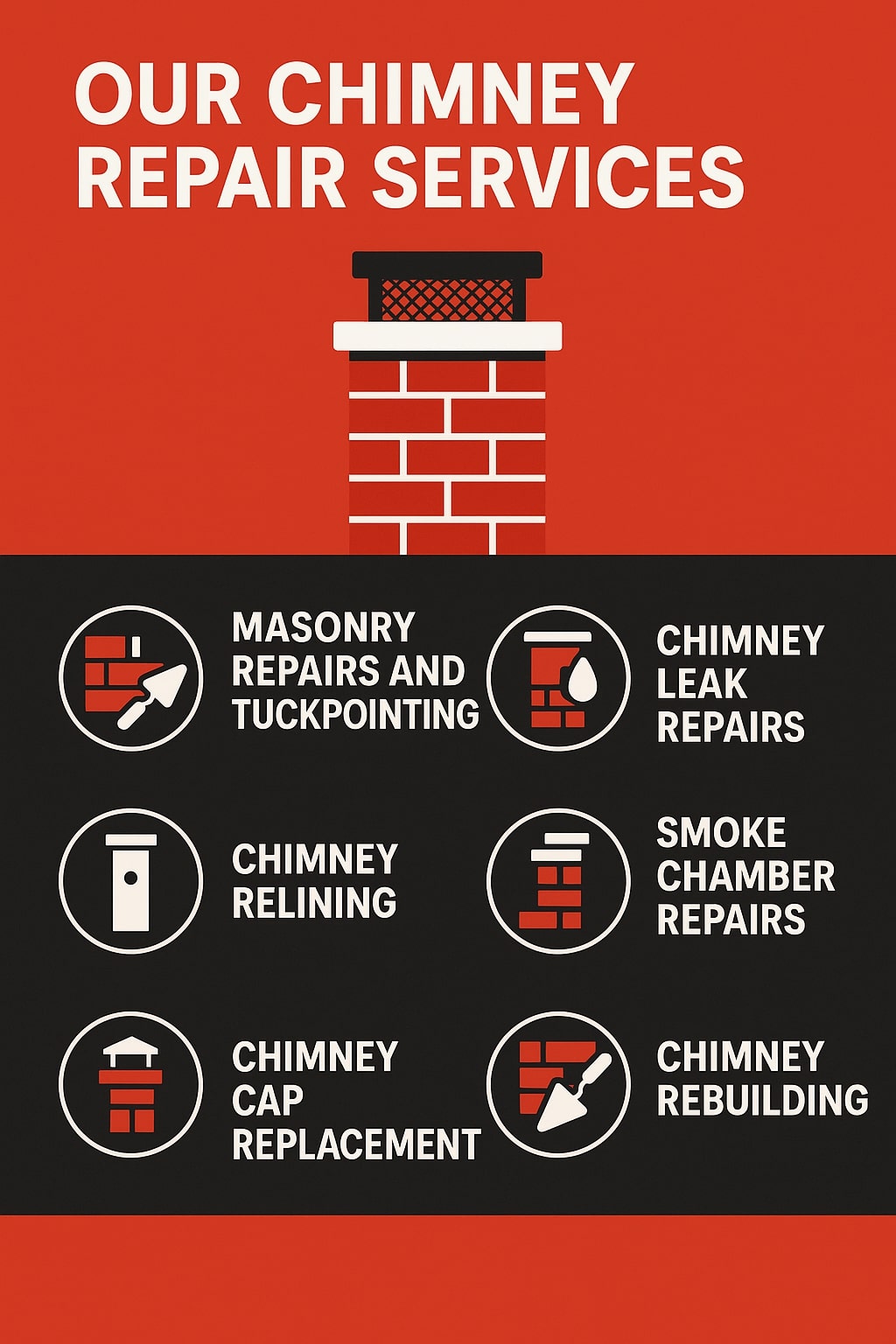
We offer a full range of chimney repair services for Bedminster homeowners. Some of the most common include:
- Masonry repairs and tuckpointing to replace crumbling mortar and reinforce structural strength
- Chimney leak repairs that address flashing, caps, crowns, and water entry points
- Chimney relining for damaged, deteriorated, or improperly sized liners
- Smoke chamber repairs and parging
- Chimney cap and chase cover replacement
- Firebox repairs
- Chimney rebuilding or partial rebuilding
- Waterproofing to slow weather-related deterioration
If you’re unsure what type of repair you need, we can perform a detailed inspection and walk you through every finding.
Call Now
About Bedminster NJ: A Community We’re Proud to Serve
Bedminster is one of New Jersey’s most charming townships, known for its rolling hills, peaceful scenery, and a rich blend of historic sites and upscale residential communities. Residents enjoy destinations like the Bedminster Heliport, the Pluckemin School House, Natirar Park’s stunning walking trails, and the historic Pluckemin Cantonment archaeological site. Outdoor lovers appreciate the open farmland and quiet roads, while families value the tight-knit community atmosphere and convenient access to both Morristown and Bridgewater. It’s a place where people truly take pride in their homes, and we’re honored to help care for the chimneys that keep those homes warm and inviting.
How Do I Know If My Chimney Needs Masonry Repair?
Masonry begins to break down long before it reaches the point of failure, and catching problems early can prevent far more expensive repairs. At Highpoint Chimney Services, we often get called when homeowners notice loose mortar, a few soft bricks, or discoloration on the outside of the chimney, but several other warning signs can indicate growing trouble.
Mortar joints can deteriorate in as little as one season if the freeze-thaw cycle is intense enough. Water enters small pores in masonry, freezes, expands, and widens those gaps. Over time this allows more water in and accelerates the breakdown. Even a small patch of crumbling mortar can compromise the structural integrity of a tall chimney stack, especially during high-wind storms that push against weakened joints. Chimneys in Bedminster experience a lot of winter moisture, so the cycle can be more aggressive than homeowners expect.
If mortar begins failing, you might notice:
- Sand-like debris at the chimney base
- Gaps between bricks
- A chalky or powdery surface
- Dampness inside the firebox after rain
- Small cracks forming along the exterior
Loose bricks can escalate into a partial collapse if ignored. And yes, a chimney really can become unstable in a single season if water intrusion is severe enough. One of the earliest warning signs of a leaning or shifting stack is slight separation from siding or rooflines. If you see even a thin shadow-gap forming, it’s time to call for help. Our team evaluates both surface damage and hidden weaknesses so you can make an informed decision about what your chimney needs.
Can Severe Weather in Bedminster Cause Chimney Damage?
Absolutely. Bedminster’s mix of winter storms, summer thunderstorms, and occasional high-wind events can all take a toll on a chimney. Many homeowners don’t realize how much force a tall chimney absorbs when wind hits it from different directions. Strong gusts can loosen already weakened mortar, tilt an older chimney that lacks structural support, or worsen small cracks in a clay liner.
Another common question is whether chimneys hold up during tornado-strength winds or severe storm cells. Even when the house stays intact, an older chimney with deteriorated mortar or missing bricks can shift or collapse. After any strong wind event, it’s wise to visually inspect your chimney from the ground.
Flooding and heavy rain also create risks. If the chimney crown is cracked or the flashing has begun to fail, stormwater can run directly into the masonry structure. After a major weather event, homeowners should:
- Check for new cracks or spalling on the exterior
- Look for moisture inside the firebox
- Keep the damper closed until the chimney dries out
- Avoid lighting a fire until a professional inspection confirms the system is safe
Lighting a fire when the flue is still damp can disrupt the draft, cause smoke to enter the room, and encourage creosote formation. With our repair and waterproofing services, we help Bedminster residents prepare their chimneys to withstand seasonal weather more effectively.
How Do Earthquakes or Ground Movement Affect Chimneys?
You might not associate New Jersey with earthquakes, but minor seismic events and natural soil shifting do occur in the region. Even small tremors can loosen mortar joints or disturb the alignment of flue tiles. A chimney is a tall, narrow structure, and it doesn’t take much movement to create small gaps.
Those gaps aren’t always visible to the naked eye. Over time they can allow heat or smoke to reach areas of the home not designed to withstand high temperatures, which increases fire risk. This is why we use specialized cameras during inspections to look for microscopic cracks or subtle misalignment inside the flue. These issues can’t be detected during a basic visual check.
We also examine the footing and base of the chimney. Soil can shift slowly over many years, especially after wet winters or long periods of heavy rain. If a chimney begins settling unevenly, vertical cracks can appear or the entire stack may tilt. The earliest warning signs include:
- Slight rotation of the top chimney section
- Cracks that are wider at the top than the bottom
- A subtle lean when viewed from a distance
- New gaps forming between chimney and roofline
Our job is to identify whether the damage is superficial or structural, then recommend the most appropriate repair approach.
Does Burning Wood, Pellets, or Gas Affect How Often Repairs Are Needed?
Fuel type plays a direct role in the condition of your chimney. Wood and pellets produce creosote, gas produces moisture and acidic byproducts, and each places different demands on the flue. Wood creates the heaviest creosote buildup, which can accumulate quickly if the chimney has any drafting issues. A single missed annual inspection can allow enough creosote to form that a chimney fire becomes possible the following season.
Pellets burn more consistently, but the appliances vent at higher temperatures, which can stress older liners. Gas systems often fool homeowners because they burn clean, but they introduce large amounts of moisture. That moisture mixes with flue gases to create mild acids that slowly corrode metal liners or soften mortar joints. For that reason, gas chimneys often need repair even though they appear clean.
Nearby construction can also change the draft long after the home was built. If a neighbor adds a second story or a new roof, or if trees mature and overhang the chimney, the airflow can change enough to cause backdrafts or encourage more creosote formation. We evaluate these environmental factors during every inspection.
What Should I Do If My Chimney Starts Showing Signs of Structural Instability?
If your chimney is leaning, cracking, or dropping pieces of brick, do not use the fireplace until it’s inspected. Even early structural weaknesses can worsen rapidly. Strong winds, heavy snow, or freeze-thaw cycles can push an already stressed chimney beyond its limit.
We recommend:
- Taking photos of any visible damage so you can track progression
- Checking the attic and nearby walls for water stains
- Looking for shifting roof flashing
- Watching for interior smoke backup
- Avoiding temporary DIY fixes that can trap moisture or make the problem harder to diagnose
Structural problems rarely resolve on their own. In Bedminster, where winter moisture is common, deterioration can accelerate quickly. Early intervention can often save the structure without a full rebuild. If a rebuild is needed, we can complete it with modern materials designed to withstand local weather more effectively.
Call Highpoint Chimney Services for Chimney Repair in Bedminster NJ
If your chimney is showing signs of damage, moisture issues, or structural wear, our team is ready to help. We take pride in protecting local homes and giving homeowners the confidence to use their fireplaces as safely and as reliably as possible.
Contact Highpoint Chimney Services today to schedule your chimney repair services in Bedminster, NJ. We look forward to serving you.